Car Wash Vehicle Handover Quality Checklist: Scope, Special Requests and Customer Communication
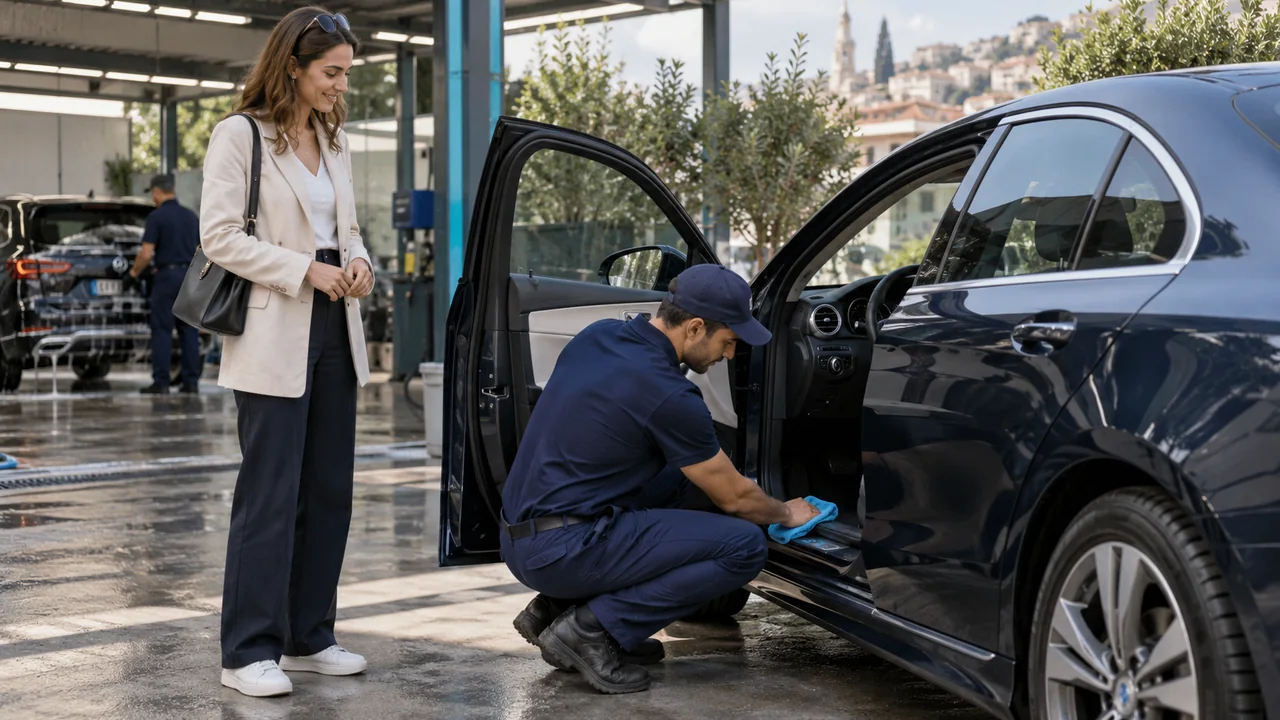
A practical car wash handover guide for checking the promise made at acceptance, following special requests and reducing avoidable rework.
Vehicle handover is part of the service, not an afterthought
A car wash experience is not complete simply because the vehicle has been cleaned. At collection, the customer considers the package scope, the value received, the outcome of any special request and the vehicle's overall condition. A forgotten cloth, an unexplained stain or a seat adjustment that has not been mentioned can affect their view of the entire job. Handover inspection should therefore be more than a casual last look. It is a brief process for checking whether the promise made at acceptance has been fulfilled.
This guide helps establish an internal quality routine for standard washing, deep interior cleaning and related care services. It is not a mechanical safety inspection, technical assessment or legal evaluation. Photographs may create a useful record, but they do not guarantee that the business will be legally protected or automatically proved right in a dispute. Manufacturer instructions, the conditions of the specific service and qualified professional advice remain relevant. All examples are hypothetical and explain a method rather than a guaranteed outcome.
Handover checks have three purposes: finding unfinished work before the customer does, making sure special requests are not forgotten and preparing a clear explanation at collection. Separate common checks from service specific checks instead of applying one identical list to every job. A short routine may be sufficient for a small wash, while a lengthy detailing treatment needs a more extensive review. If no time is allocated for inspection, it will repeatedly be rushed, undermining the standard you are trying to establish.
Quality control begins when the vehicle is accepted
To judge whether a vehicle is ready, you need to know what the customer requested. A package name may not provide enough detail. Someone asking for an interior and exterior wash may expect a particular seat stain to be removed, although upholstery washing is not included in the standard package. Explaining scope and recording the request at acceptance reduces the risk of an expectation gap later. Listening to a request is not the same as guaranteeing its result without conditions.
Where appropriate, review the vehicle's existing condition with the customer. Make a suitable note of an obvious scratch, damaged component, loose accessory or condition affecting the cleaning outcome. Do not imply that every vehicle receives a comprehensive technical examination. If photographs are used, explain their purpose and access arrangements, and avoid unnecessarily photographing personal belongings inside the vehicle. Manage records in line with the business's retention and privacy arrangements.
OtoPatron work order notes, selected services and available photographic record tools can help pass acceptance information to the team. Remember that an application field does not create a quality certificate or official inspection report. The person checking the finished vehicle should be able to read the job scope and see which request was specifically discussed with the customer. Information lost at acceptance cannot reliably be recreated from memory at collection. A useful checklist starts with agreement between the service requested and the scope recorded by the business.
Separate common checks from service specific checks
Some checks apply to every job: the correct number plate and work order, completion of the selected services, removal of business equipment from the vehicle and careful treatment of personal belongings. A standard exterior wash, however, does not promise the same technical result as a deep interior clean. Adding a short service specific section to a common checklist prevents staff from getting lost in irrelevant items.
For exterior washing, the review may cover visible surfaces, rinse marks, glass visibility and accessible details included in the package. For interior cleaning, it may cover the agreed surfaces, any material or equipment left behind and the moisture condition after wet work. Be explicit about which surfaces are included. Engine compartments, delicate coatings and electronic components require methods consistent with the relevant manufacturer and product instructions, rather than a general assumption that one method suits everything.
Do not try to include every possible defect when writing the first version. Start with five issues that have most often required correction in recent weeks. For example, glass streaks, missed door edges, mat positioning, forgotten special requests and an uncommunicated collection note may be relevant. Write an observable check for each. Instead of a vague instruction such as make it look clean, use a description the team understands, such as checking the included glass surfaces for obvious application marks. The list exists to help different people finish the same service consistently, not to burden them with unnecessary paperwork.
Inspect exterior surfaces in appropriate light
A dark inspection point or one with intense reflections can make visible application marks difficult to identify. Within the space available, choose an area with reasonably balanced light. Repeatedly blocking the handover inspection area to accept another vehicle can interrupt the process. The chosen point should fit the workflow without obstructing safe vehicle movement. Since facilities differ, no single physical layout is suitable for everyone.
Start with the general appearance, then follow an agreed sequence. Windscreen, side glass, mirror areas, doors, wheels and the rear section can form a consistent circuit that reduces omissions. The inspection should remain within the package scope. Do not interpret existing scratches or coating defects as something caused by the wash without reviewing the acceptance note. If a questionable condition appears, notify the responsible person rather than trying an improvised treatment to remove it.
Suppose a customer has specifically requested attention to the inside door edges. Even if the overall exterior looks good, that particular request still needs checking. When it is recorded on the work order, make it easy for the handover inspector to notice the relevant item. If an area needs further work, allow time for the appropriate correction before marking the vehicle ready. Finding a small omission before the customer sees it shows that the process is useful. Skipping a checklist item to hide a mistake weakens the whole routine.
Review interior scope, order and moisture
An interior that looks glossy at first glance has not necessarily been checked properly. Confirm that areas included in the package have been completed, business materials such as cloths and attachments have been removed and mats are positioned appropriately. If the seat or steering position was altered for access, the customer may need to be told. Avoid unnecessary operation of vehicle controls or systems.
Services involving wet upholstery or mat cleaning require a separate assessment of collection conditions. Drying time varies with the environment, material, method and weather. Do not promise that everything will be completely dry after one universal number of hours. Explain the current condition, relevant usage precautions and your business's advice. Refer to the product or vehicle manufacturer's instructions where needed. Do not make a categorical safety claim about a technical matter you have not established.
If belongings have to be moved, leaving them carelessly in another area can spoil the collection experience. Explain the business's belongings policy at acceptance and, where appropriate, ask the customer to remove valuable or sensitive items. Taking a photograph of every possession is not a necessary part of quality control. The process should protect privacy. A short interior list may include agreed surfaces, forgotten equipment, mat positioning, the special request and any moisture condition requiring explanation. Assess the actual vehicle rather than assuming every job can be handed over with an identical result.
Give glass, mirrors and viewing areas a separate check
Application marks on glass are among the first issues a customer may notice after driving away. A short, separate glass and mirror check can therefore be useful. Review the surfaces included in the package under suitable light. Marks on the inside and outside may have different causes; identify the affected surface before repeatedly applying more product. Staff should understand the suitability and instructions of the products they use.
This is not a comprehensive assessment of driving safety. If an existing crack, film issue or technical condition is noticed, an unqualified employee is not expected to diagnose it conclusively. A relevant observation can be brought to the customer's attention appropriately. Aftermarket films and other sensitive surfaces particularly require cleaning consistent with their manufacturer's instructions. Do not assume a general cleaner can be applied in the same way to every vehicle.
Imagine a customer reporting glass streaks shortly after collection. Before becoming defensive, ask which surface is affected and under what conditions the marks appear. Offer a review in line with the business's correction policy. Keeping a record can help identify whether a particular product, cloth routine or method repeatedly causes problems. Customer feedback is as relevant to quality assessment as what staff saw at handover. The objective is not to close every complaint by insisting the customer is mistaken, but to identify a recurring application problem through concrete information.
Keep special requests and additional services visible
A request concerning a particular stain, odour, surface or area should be addressed explicitly during the handover check. Some requests fall outside the standard package; others may have been separately priced before work began. Extending the scope without approval can create an unexpected charge. Failing to carry out or record an approved extra can also undermine trust. Acceptance, application and payment records should preserve the same agreed scope.
Passing special requests between employees only by word of mouth makes them vulnerable during busy periods. OtoPatron notes and service selections can help keep the information visible. Use a short, clear description rather than an unnecessarily long paragraph. For example, check the inside of the left rear door as requested is more useful than take extra care. Avoid putting sensitive personal information into a job note when it is not needed.
If the requested result has not been fully achieved, discuss that openly at collection. Even where no unconditional promise was made at acceptance, the outcome still needs explaining. State what was done and what remains. Any further treatment should have its scope and cost assessed separately. Concealing an issue to make the service appear successful can cause a larger disagreement. Your checklist can use simple statuses such as completed, explanation required or further assessment required. These can be implemented through an appropriate note routine without assuming they are dedicated automatic product features.
Make responsibility for inspection clear
The person cleaning the vehicle should first review their own work. Where capacity allows, another employee or supervisor can carry out a brief second check before collection. This does not mean every business must hire additional staff. At a one person facility, the same person can review the result again in a different sequence. The important point is that inspection is a defined task rather than something that happens by chance.
The inspector's role is not only to look for omissions. Reading the work order, considering acceptance notes, referring necessary corrections to the right person and preparing the collection explanation also belong to the task. If several staff have worked on the same vehicle, placing all responsibility on the last person to touch it may be unfair. Consider service assignments and team communication together.
Decide how completion of the check will be recorded. If your product does not provide a dedicated quality inspection field, do not pretend that it does. Use an appropriate work order note or an internal form instead. Record the time and necessary explanation without adding irrelevant personal judgements. An employee's name alone does not explain quality: workload, unavailable materials and the time allowed can also affect the outcome. Clear inspection responsibility can reduce contradictory messages to customers. Its purpose is to make the completed stage visible to the team, not simply to identify someone to blame.
When should the ready for collection message be sent?
Sending a ready message as soon as cleaning ends may seem efficient. If quality control or a payment explanation is still outstanding, however, the customer may arrive too soon. Define what ready means in your business. Application completed, handover check performed and matters requiring discussion identified should not become disconnected stages. The notification should reflect actual preparation for collection.
OtoPatron WhatsApp notifications can help inform the customer at appropriate points in the workflow. The integration and internet connection need to be working. Creating a message does not prove that the customer has read it or will arrive immediately. Set a separate communication policy for vehicles remaining on site or not being collected as expected. For a critical issue, use an appropriate alternative contact method where necessary rather than relying entirely on automation.
Suppose cleaning finishes at four o'clock but inspection identifies a correction requiring five minutes. If the customer has already been told the vehicle can be collected immediately, even that small correction can create avoidable waiting. Including inspection in the planned service time reduces the risk. Message text should not promise unverified technical results or additional work that remains unfinished. A ready notification is intended not only to bring the customer back quickly but to bring them back at the right time. Internal status labels and the customer's understanding of collection should remain consistent.
Keep the collection conversation short and clear
Begin by explaining the services completed and the result of any special request. Give the customer a suitable opportunity to look over the vehicle. A good handover does not consist of rushing someone directly to payment. At the same time, a standard wash does not require a lengthy presentation. A brief explanation matched to the service, vehicle condition and customer's questions is usually sufficient.
Do not conceal moisture, a remaining stain or an aftercare condition because you want the job to appear better. Where a technical treatment has specific usage conditions, base the explanation on the manufacturer instructions and the nature of the service. One generic instruction may not be right for every vehicle. If you are uncertain, identify the need for appropriate expert review instead of promising a definite time or result. The service approved at acceptance and the scope described at handover should agree.
Explain the total and payment method. A digital receipt sent to the customer can provide a service summary, but should not be described as automatically replacing an official financial document. The business's tax documentation process remains separate. If an omission is identified during the conversation, agree the appropriate correction or follow up. When the customer must leave immediately, record when and how the resolution will be provided. A named person and a suitable time are more useful than an indefinite promise to look at it later.
How should rework be recorded?
A need for correction may be found during inspection or after collection. Following the reason and the remedial work is more useful than deleting the event from the record. Rework is not always caused by carelessness. A misunderstood scope, unsuitable materials, insufficient collection time or a request that was not passed on can all be responsible. The same visible outcome may have different underlying causes.
Suppose four of forty paid jobs during a week require glass cleaning again. Using that definition, the rework rate is ten percent. This is not a sector average or a recommended target. Define which services are included and what counts as rework before comparing percentages. Counting two small corrections on one vehicle as two events produces a different result from counting one affected vehicle. Consistent definitions make the review meaningful.
A rough record of time and materials used for rework can support improvement decisions. Whether additional work can be charged depends on responsibilities and service conditions; do not introduce an unexpected charge without discussion. OtoPatron job history and notes can help associate the event with the relevant vehicle. Do not promise automatic rework analysis or a built in quality score without confirming that capability. A simple internal sheet is another option. The goal is to choose a concrete change that reduces recurrence, not merely to make the reported rate look lower.
Preserve records and privacy when handling complaints
When a customer reports a problem, start by listening carefully and understanding the observation. Ask when it was noticed, which area is involved and what outcome they expect. Find the related work order without collecting unnecessary personal information. Incomplete records do not automatically make the customer wrong. Equally, one photograph is not enough to claim that the cause of the entire event has been established conclusively.
Where acceptance and handover photographs exist, review relevant observations. Angle, light and coverage affect what a picture shows. You cannot assume an area was faultless because it was outside the frame. Photographs support a record; they are not a legal guarantee or substitute for technical assessment. Serious damage allegations may require appropriate expertise and professional support. Avoid dismissive comments about the customer in internal communication. Such notes also make the process more difficult to understand later.
Share images and customer information only with people who need access. Publishing a plate, phone number or private belongings on social media to defend the business may make resolution more difficult. The business should decide appropriate retention, access and deletion arrangements. OtoPatron record and access tools can support the allocation of responsibilities, but they do not automatically complete every privacy obligation. A complaint record should clearly state the observation, planned review, agreed resolution and next contact time.
Adapt the workflow so checks survive busy periods
Quality inspection can become the first step abandoned during weekend demand. The problem may be that no time was allocated for it, rather than that the list is unnecessary. If the check is squeezed into the instant the next vehicle needs to leave, staff can only make a superficial review. Include a short inspection interval in appointment and acceptance planning. Consider service duration, checking needs and actual team capacity together.
A narrow facility may have no spare bay for inspection. In that case, define when application ends and inspection begins in the same space. Constant interruption by new customer requests increases the chance of missing an item. Where duties allow, one employee can accept the next vehicle while another completes the handover check. If the owner must do everything at once, limiting accepted work may be more realistic.
Imagine allowing three minutes of checking per job. Across twenty jobs that is sixty minutes, a genuine part of the plan rather than time that should be hidden as waste. Some jobs need less inspection and others more. This is an illustration, not a universal timing target. Update the plan using observations from your own business. The capacity planning guide can help distinguish checking from active labour and waiting. Accepting more vehicles than the quality routine can support may increase short term revenue while weakening return visits.
A practical vehicle handover checklist for the team
First confirm the correct work order and number plate. Check that selected services are complete, approved extras agree with the price record and the customer's special request has been assessed. Work still in progress should not appear ready. If a service was cancelled or its scope changed, prepare the explanation. The first part of the common list checks agreement between the record and expectations before examining the physical cleaning result.
Next, carry out exterior and interior checks appropriate to the service. Review the agreed surfaces, obvious glass or mirror application marks, mat positioning, business equipment left in the vehicle and any moisture requiring explanation. This is not a mechanical safety inspection or a guarantee of results on every surface. Refer a questionable technical condition to the responsible person. Do not improvise a quick correction with an unsuitable product; follow the relevant method and product instructions.
Finally, prepare the customer explanation and payment status. Be clear about completed work, anything remaining, a follow up appointment where relevant and the total charge. Preserve the distinction between a digital service summary and a financial document. Send the ready notification when the vehicle is actually prepared for collection. Record the inspector and necessary explanation through your existing routine. Digital receipts, WhatsApp communication and car wash management software support different parts of this workflow. Learn whether the list is effective by reviewing repeated omissions each week.
Frequently asked questions
Must every vehicle be photographed? This guide does not establish a universal requirement. Assess the purpose, service type and appropriate record policy. Images do not provide a legal guarantee and should not contain unnecessary personal information. What if a customer does not want to inspect the vehicle? Offer a brief explanation without forcing a long review. Clearly communicate the service and any significant condition that needs attention.
Can a single employee perform quality control? Yes. After application, the person can review the result again in an agreed sequence. A second employee may provide a useful additional check, but a checklist does not automatically require another staff member. Does the same list apply to every service? Basic record and handover items can be shared, while technical and physical inspection scope varies. A standard wash and a detailing treatment do not promise identical results.
Should inspection time be included in the promised collection time? Yes, the actual plan should allow room for checking and small corrections. Does a ready message guarantee that everything is faultless? No. The business needs a dependable process and the message should reflect actual preparation. Does a complaint after collection mean the whole service failed? Review scope, records and application rather than generalising from a single event. Repeated issues should inform improvements. Combine the checklist with the daily cash closing guide for payment discipline and the first ninety days plan when establishing standards in a new business.
After trying the list for a week, review it with the team. Ask which item was unclear, which check lacked an appropriate space and which special request was not visible in the record. Remove unnecessary duplication and make commonly missed, customer relevant items more prominent. Treat feedback as information about whether the service was explained properly, not just as a complaint count. A short list that staff can use is more helpful than an extensive document nobody reads. The standard should develop through actual working experience.
Found this article helpful? Share it with others!
24+ Powerful Features for Your Business
Explore tools built for car washes, vehicle valeting and detailing centres.
License Plate Recognition
Use camera-assisted intake to reduce typing and make vehicle records easier to follow.
WhatsApp Updates
Send vehicle acceptance updates, “Your vehicle is ready” messages and digital receipts from the workflow.
Car Wash Management Software
Car wash management with plate recognition, WhatsApp and customer accounts.
Outstanding Balances & Customer Accounts
Track fleet balances and share PDF account statements through WhatsApp.
Income, Expenses & Cash
Review cash, card and transfer receipts alongside business expenses.
Staff & Technician Commissions
Review the vehicles assigned to staff and the commissions recorded for their work.
Customer Loyalty Cards
Encourage repeat visits with rewards such as “One free wash after five visits”.
Online Booking
Let customers book online and help your team plan arrivals more effectively.
Digital Service Receipts
Share a branded PDF service receipt through WhatsApp instead of a handwritten note.
Cloud Car Wash Software
Access the cloud system from compatible phones and tablets without a local installation.
Products & Stock Management
Follow shampoo, polish and fragrance stock, and check the available stock controls for your setup.
Detailed Reports & Analysis
Use charts to review valuable services, busy periods and turnover.
Customer & Vehicle CRM
Find customers, phone numbers and previous wash records together.
Mobile & Cloud Access
Review your business from a compatible phone or tablet without a dedicated terminal.
Intake & Condition Photos
Photograph visible scratches and damage at arrival to support a documented handover.
Choosing Car Wash Software
Explore the modules and selection criteria that matter for your business.
Valeting & Detailing
Organise polishing, ceramic coating and valeting appointments alongside material records.
Wash Bays & Workflows
Follow vehicle work stages and workshop activity on a shared dashboard.
Automatic Workflow Transitions
Mark a vehicle ready when the work is finished and send the relevant delivery update.
Weekly Turnover Analysis
Review busy hours and turnover charts for the last seven weeks.
Daily Turnover Targets
Set a daily turnover goal and give the team a clear reference for the day.
Tips & Pool Allocation
Record customer tips and distribute the pool transparently using your agreed rule.
Staff Attendance & Working Hours
Record shifts, late arrivals and absences digitally.
Weather Forecasts
Consider weather forecasts when planning the day's workload.
Vehicle Wash Tracking
Follow vehicle work stages and daily handovers.
Car Wash Automation
A nine-point guide to moving from pen and paper to more organised digital operations.
User Access Controls
Choose unrestricted account access, a daily time window, an active employee shift or both conditions together.
License Plate Recognition
Use camera-assisted intake to reduce typing and make vehicle records easier to follow.
WhatsApp Updates
Send vehicle acceptance updates, “Your vehicle is ready” messages and digital receipts from the workflow.
Car Wash Management Software
Car wash management with plate recognition, WhatsApp and customer accounts.
Outstanding Balances & Customer Accounts
Track fleet balances and share PDF account statements through WhatsApp.
Income, Expenses & Cash
Review cash, card and transfer receipts alongside business expenses.
Staff & Technician Commissions
Review the vehicles assigned to staff and the commissions recorded for their work.
Customer Loyalty Cards
Encourage repeat visits with rewards such as “One free wash after five visits”.
Online Booking
Let customers book online and help your team plan arrivals more effectively.
Digital Service Receipts
Share a branded PDF service receipt through WhatsApp instead of a handwritten note.
Cloud Car Wash Software
Access the cloud system from compatible phones and tablets without a local installation.
Products & Stock Management
Follow shampoo, polish and fragrance stock, and check the available stock controls for your setup.
Detailed Reports & Analysis
Use charts to review valuable services, busy periods and turnover.
Customer & Vehicle CRM
Find customers, phone numbers and previous wash records together.
Mobile & Cloud Access
Review your business from a compatible phone or tablet without a dedicated terminal.
Intake & Condition Photos
Photograph visible scratches and damage at arrival to support a documented handover.
Choosing Car Wash Software
Explore the modules and selection criteria that matter for your business.
Valeting & Detailing
Organise polishing, ceramic coating and valeting appointments alongside material records.
Wash Bays & Workflows
Follow vehicle work stages and workshop activity on a shared dashboard.
Automatic Workflow Transitions
Mark a vehicle ready when the work is finished and send the relevant delivery update.
Weekly Turnover Analysis
Review busy hours and turnover charts for the last seven weeks.
Daily Turnover Targets
Set a daily turnover goal and give the team a clear reference for the day.
Tips & Pool Allocation
Record customer tips and distribute the pool transparently using your agreed rule.
Staff Attendance & Working Hours
Record shifts, late arrivals and absences digitally.
Weather Forecasts
Consider weather forecasts when planning the day's workload.
Vehicle Wash Tracking
Follow vehicle work stages and daily handovers.
Car Wash Automation
A nine-point guide to moving from pen and paper to more organised digital operations.
User Access Controls
Choose unrestricted account access, a daily time window, an active employee shift or both conditions together.
License Plate Recognition
Use camera-assisted intake to reduce typing and make vehicle records easier to follow.
WhatsApp Updates
Send vehicle acceptance updates, “Your vehicle is ready” messages and digital receipts from the workflow.
Car Wash Management Software
Car wash management with plate recognition, WhatsApp and customer accounts.
Outstanding Balances & Customer Accounts
Track fleet balances and share PDF account statements through WhatsApp.
Income, Expenses & Cash
Review cash, card and transfer receipts alongside business expenses.
Staff & Technician Commissions
Review the vehicles assigned to staff and the commissions recorded for their work.
Customer Loyalty Cards
Encourage repeat visits with rewards such as “One free wash after five visits”.
Online Booking
Let customers book online and help your team plan arrivals more effectively.
Digital Service Receipts
Share a branded PDF service receipt through WhatsApp instead of a handwritten note.
Cloud Car Wash Software
Access the cloud system from compatible phones and tablets without a local installation.
Products & Stock Management
Follow shampoo, polish and fragrance stock, and check the available stock controls for your setup.
Detailed Reports & Analysis
Use charts to review valuable services, busy periods and turnover.
Customer & Vehicle CRM
Find customers, phone numbers and previous wash records together.
Mobile & Cloud Access
Review your business from a compatible phone or tablet without a dedicated terminal.
Intake & Condition Photos
Photograph visible scratches and damage at arrival to support a documented handover.
Choosing Car Wash Software
Explore the modules and selection criteria that matter for your business.
Valeting & Detailing
Organise polishing, ceramic coating and valeting appointments alongside material records.
Wash Bays & Workflows
Follow vehicle work stages and workshop activity on a shared dashboard.
Automatic Workflow Transitions
Mark a vehicle ready when the work is finished and send the relevant delivery update.
Weekly Turnover Analysis
Review busy hours and turnover charts for the last seven weeks.
Daily Turnover Targets
Set a daily turnover goal and give the team a clear reference for the day.
Tips & Pool Allocation
Record customer tips and distribute the pool transparently using your agreed rule.
Staff Attendance & Working Hours
Record shifts, late arrivals and absences digitally.
Weather Forecasts
Consider weather forecasts when planning the day's workload.
Vehicle Wash Tracking
Follow vehicle work stages and daily handovers.
Car Wash Automation
A nine-point guide to moving from pen and paper to more organised digital operations.
User Access Controls
Choose unrestricted account access, a daily time window, an active employee shift or both conditions together.
Bring Your Car Wash Online
Manage plate recognition, WhatsApp receipts, cash and customer accounts in one place. Build relationships with returning customers.